
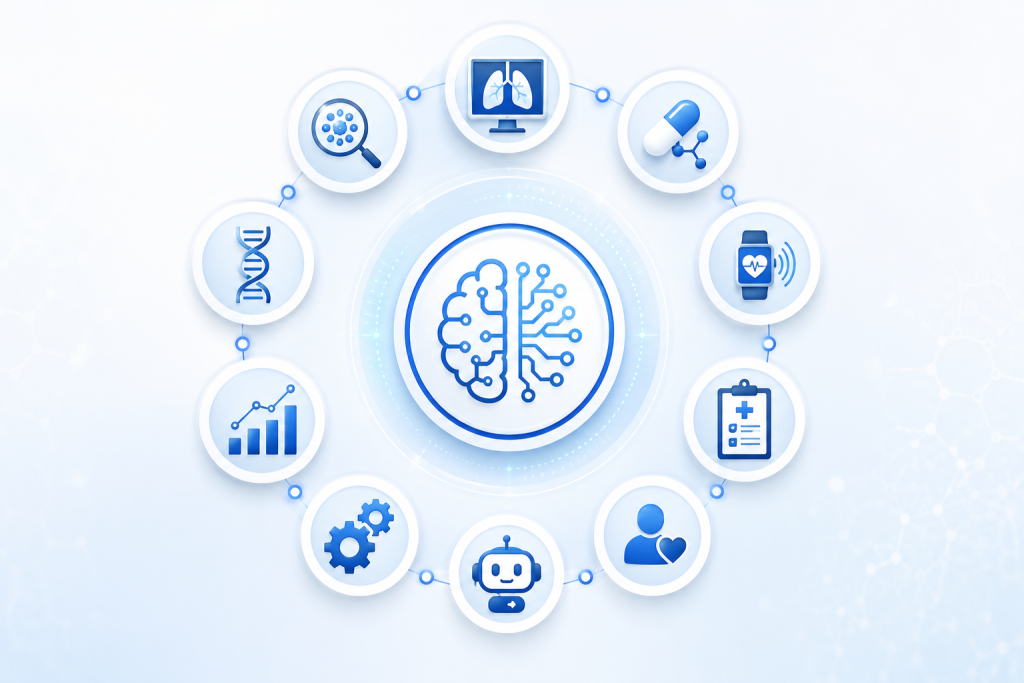
The Rise of AI in Medicine: A New Era for Healthcare
The evolution of artificial intelligence has made remarkable strides in nearly every industry, but perhaps nowhere is its impact felt more significantly than in healthcare. From improved diagnostics to faster drug discovery, AI in medicine is reshaping traditional practices and redefining patient care. As hospitals, clinics, and labs continue to adopt these advanced solutions, AI is rapidly changing how medical professionals approach both routine and complex challenges. Here are ten compelling ways AI healthcare innovation is revolutionizing the field.
1. Enhancing Diagnostic Accuracy
One of the most profound benefits of artificial intelligence medicine is its ability to assist doctors in making faster and more accurate diagnoses. AI-powered tools can analyze everything from X-rays and MRIs to pathology slides, flagging abnormalities and suggesting potential concerns. These AI medical applications often detect early signs of diseases like cancer or neurological disorders that could be missed by the human eye, enabling more timely treatments and better outcomes.
2. Personalizing Treatment Plans
Each patient has unique needs and medical histories. Modern medical AI solutions process data from genetic tests, health records, and lifestyle factors to suggest personalized treatment approaches. This tailored care leads to higher success rates and minimizes side effects, making treatment more effective and safer for individual patients.
3. Accelerating Drug Discovery
Drug development is notoriously time-consuming and costly. By leveraging AI healthcare innovation, researchers can rapidly analyze vast datasets to identify potential compounds, simulate drug interactions, and predict success rates. This dramatically expedites the discovery process and can result in breakthrough medications reaching patients faster.
4. Predicting Patient Outcomes
AI in medicine is increasingly being used to forecast patient outcomes. Machine learning algorithms crunch patient data to identify individuals at higher risk of complications or readmission. By catching these risks early, healthcare professionals can allocate resources proactively and intervene before problems escalate.
5. Improving Clinical Workflow Efficiency
Modern medical AI technologies streamline administrative and clinical tasks, easing the burden on healthcare workers. Automated scheduling, digital transcription, and electronic record-keeping not only free up valuable time for clinicians but also reduce the likelihood of errors and improve overall quality of care.
6. Aiding in Preventive Medicine
Prevention is often the best cure, and AI medical applications are making it easier to catch risk factors before illnesses develop. By analyzing patterns in wearable device data, medical records, and even social media posts, artificial intelligence medicine can identify early warning signs of conditions like diabetes or heart disease, allowing patients and doctors to take action sooner.
7. Powering Virtual Health Assistants
Chatbots and intelligent virtual assistants have become valuable tools for both patients and providers. These AI-driven agents can answer questions, provide medication reminders, and even offer mental health support. As a form of AI changing healthcare, these digital helpers ensure continuous patient engagement and can triage simple issues before they become emergencies.
8. Supporting Radiology and Imaging Analysis
The sheer volume of medical images produced daily is staggering, making image interpretation a perfect fit for AI healthcare innovation. AI algorithms can review scans in seconds, providing radiologists with ranked lists of likely diagnoses. This not only speeds up the process but also improves accuracy and reduces fatigue-related errors.
9. Facilitating Remote Monitoring and Telemedicine
AI in medicine also empowers remote patient monitoring. Smart devices equipped with AI can track vital signs and symptoms in real time, alerting care teams to changes that may require attention. This capability has been crucial during the rise of telemedicine, making ongoing patient care more flexible and responsive.
10. Advancing Genomic Medicine
Artificial intelligence medicine is opening new doors in genomics. By analyzing vast quantities of genetic data, AI can identify links between genes and diseases, uncover personalized treatment options, and even predict inherited conditions. This progress brings us closer to truly customized, preventive healthcare.
The Future of AI Medical Applications
As AI medical applications advance, their ability to support and enhance the healthcare ecosystem will only increase. From diagnosis to recovery, innovative uses of AI are making care more precise, efficient, and patient-centered. While challenges remain regarding data privacy, ethical use, and integration, the benefits are undeniable.
AI in medicine is not just a trend; it’s a vital force shaping the future of healthcare. As technology evolves, both patients and providers can look forward to a system guided by innovation, compassion, and smarter decision-making.